
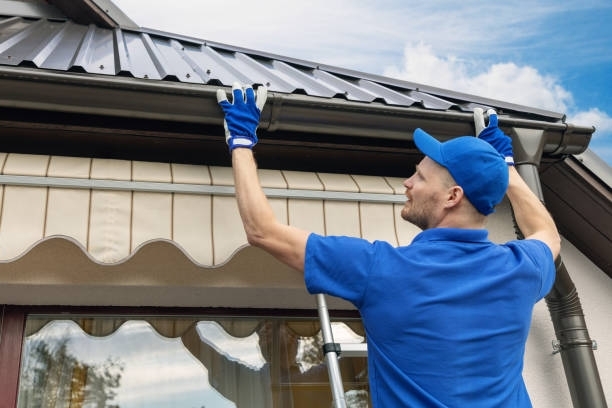
Any licensed roofer working in NSW should carry public liability insurance with a minimum cover of $5 million, though $10 million or $20 million is increasingly common for residential roofing work. This insurance protects you as the homeowner if a worker is injured on your property or if damage occurs to your home or a neighbouring property during the job. In this article, we cover what to check, what the documents should say, and why this matters especially for homeowners in Penrith, Western Sydney, the Blue Mountains, and the Hawkesbury region.
Understand what public liability insurance actually covers
Public liability insurance is not the same as workers compensation or professional indemnity insurance. It specifically covers third-party claims for bodily injury or property damage caused by the contractor while working on your property.
If a roofer drops a tool and it damages your neighbour’s car, public liability covers that. If a contractor slips off your roof and injures themselves, that is where workers compensation applies instead.
Knowing the difference helps you ask the right questions before work begins. Here is a quick breakdown of the main insurance types roofers should carry:
| Insurance Type | What It Covers | Who It Protects |
|---|---|---|
| Public Liability | Third-party injury or property damage | You, neighbours, the public |
| Workers Compensation | Injuries to the contractor or their workers | The workers on your roof |
| Professional Indemnity | Errors in design, advice, or workmanship | You, if poor advice causes loss |
| Contract Works (Builders All Risk) | Damage to the work in progress | The project itself |
For most residential roofing jobs in NSW, public liability and workers compensation are the two non-negotiables. Always confirm both are current before allowing any work to begin.
Check the certificate of currency before work starts
A certificate of currency is the official document that proves a roofer’s insurance policy is active. It is issued by the insurer and shows the policy holder’s name, the insurer’s name, the type of cover, the coverage amount, and the policy expiry date.
Do not accept a verbal assurance that insurance exists. Ask for the certificate in writing. A reputable roofing company will have no problem providing this before the job starts.
Here is what to look for when you receive the certificate:
- The policy holder name matches the company or trader you hired
- The coverage amount is at least $5 million (preferably $10 million or more)
- The policy is current and does not expire during your job
- The insurer is an authorised Australian insurer (check APRA’s register if unsure)
- The work type listed includes roofing or trade contractor work
If any of these details look off or the contractor hesitates to share the document, treat that as a warning sign. Silverleaf Roofing provides certificates of currency to all customers on request before any job begins.
Know the NSW licensing requirements for roofers
In NSW, roofing work valued at over $5,000 (including labour and materials) must be carried out by a contractor holding a valid NSW Fair Trading licence. The relevant licence class for roof plumbing is through the NSW Plumbing and Drainage Act, while general roof tiling and cladding falls under the Home Building Act 1989.
Insurance and licensing often go hand in hand. NSW Fair Trading requires licensed contractors to hold home building compensation cover (formerly known as home warranty insurance) for residential work over $20,000. This is separate from public liability but equally important.
You can verify a contractor’s licence on the NSW Fair Trading licence check tool at www.onlineregistry.fairtrading.nsw.gov.au. Enter the contractor’s name or licence number and confirm it is active and unrestricted.
In Penrith and the broader Western Sydney area, councils like Penrith City Council may also require licensed contractors for certain structural roofing work connected to DA approvals. Always confirm local requirements before major roof replacements or extensions.
Compare insurance minimums across common roofing jobs
Not all roofing jobs carry the same level of risk, and insurance requirements can vary depending on the scope of work. A small repair job on a single-storey home in Emu Plains is a different risk profile from a full roof replacement on a two-storey home in Springwood in the Blue Mountains.
Here is a general guide to recommended minimum public liability cover by job type:
| Job Type | Recommended Minimum Cover | Notes |
|---|---|---|
| Minor roof repairs (under $5,000) | $5 million | Still check for currency |
| Full roof replacement | $10 million | High risk, multi-day exposure |
| Storm damage restoration | $10 to $20 million | Often involves multiple trades |
| Commercial or strata roofing | $20 million+ | More complex liability exposure |
| Guttering and downpipe work only | $5 million | Lower risk but still required |
In the Hawkesbury region, properties are often on larger blocks and older homes may have heritage considerations. These factors can increase the complexity and risk of roofing jobs, making higher coverage levels more important.
Ask these specific questions before hiring any roofer
Getting insurance information does not need to be an awkward conversation. Most professional roofers expect it and will respond well to direct questions. Here are the questions you should ask every contractor before signing anything:
- Do you hold current public liability insurance, and can you provide your certificate of currency?
- What is your coverage amount, and does it cover the type of work you are doing at my property?
- Do you and all your workers hold current workers compensation insurance?
- Are you licensed with NSW Fair Trading, and can I see your licence number?
- Will any subcontractors be on site, and do they hold their own insurance?
- Does your policy cover damage to neighbouring properties during the work?
That last question about subcontractors is important. Some roofing companies use subbies for labour, and if those workers are not properly insured under the principal contractor’s policy, you may have a gap in coverage.
At Silverleaf Roofing, all subcontractors we engage are required to provide their own certificates of currency before they attend any job site. We do not compromise on this.
Recognise red flags that suggest a roofer is underinsured
Unfortunately, not every contractor operating in the Penrith and Western Sydney area is properly insured. Some cowboys cut costs by skipping insurance altogether or letting policies lapse. Here are the warning signs to watch for:
- The contractor quotes significantly lower than every other roofer. Cheap quotes sometimes reflect missing overheads like insurance premiums.
- They are unwilling or slow to provide a certificate of currency when asked.
- The business name on the insurance document does not match what is on their quote or invoice.
- The policy expiry date falls before your job is scheduled to finish.
- They ask for large cash payments upfront with no formal contract.
- They have no verifiable licence number or business address.
- They cannot name their insurer when asked directly.
After major storm events, which are common across the Blue Mountains, Hawkesbury, and Western Sydney, unlicensed traders often flood the area looking for quick work. This is exactly when being thorough about insurance checks matters most.
If a roofer cannot or will not verify their insurance, walk away. The financial risk to you is too high to proceed on trust alone.
FAQs on public liability insurance for roofers
What happens if a roofer is not insured and something goes wrong?
If an uninsured roofer causes damage to your property or injures someone while working on your home, you may be held liable for the costs. This could mean paying for repairs to your own home, a neighbour’s property, or even legal costs if someone pursues a claim. Always verify insurance before work starts.
Can I rely on my own home insurance to cover a roofer’s mistakes?
Your home and contents policy may offer some protection, but it is not designed to cover a contractor’s negligence. Making a claim for damage caused by a third party can still affect your premium and excess. The responsibility sits with the contractor, and their insurance should be the first line of defence.
Does a roofer’s public liability insurance cover defective workmanship?
Public liability generally covers accidental damage or injury, not poor workmanship itself. For defective work, professional indemnity insurance or a builder’s statutory warranty under the Home Building Act 1989 is more relevant. Ask your roofer what warranty they offer on their work in addition to their insurance.
Is it legal to hire an uninsured roofer in NSW?
There is no law preventing you from hiring an uninsured contractor for work under the licensing threshold, but it carries serious financial risk. For licensed work categories, NSW Fair Trading requires certain insurance to be held as a condition of the licence. Hiring an unlicensed contractor for work that requires a licence can void your legal protections entirely.
How often should I check that a roofer’s insurance is current?
Ask for a certificate of currency at the quoting stage and again before work begins, especially if there is a gap between quoting and starting. Policies renew annually, so a certificate that was valid in autumn may have lapsed by spring. For longer projects, it is reasonable to ask for confirmation mid-job as well.
Do I need to notify my own insurer when roofing work is being done?
It is a good habit to inform your home insurer when major roofing work is planned. Some policies have conditions around unoccupied properties or properties under active construction. A quick call to your insurer ensures your own cover remains valid throughout the project.
Wrap up and next steps
Checking a roofer’s public liability insurance is not an optional extra. It is a basic step that protects your home, your finances, and your neighbours. Look for current coverage of at least $5 to $10 million, verify the certificate of currency, and confirm the contractor holds a valid NSW Fair Trading licence before any work begins.
Silverleaf Roofing is fully insured and licensed to work across Penrith, Western Sydney, the Blue Mountains, and the Hawkesbury region. We are happy to provide our certificate of currency and licence details at any stage of the quoting process. Call us on 0413461110 to request a free roof inspection or quote, and we will make the whole process straightforward from the very first conversation.